



Birds of a feather….

….fly together.

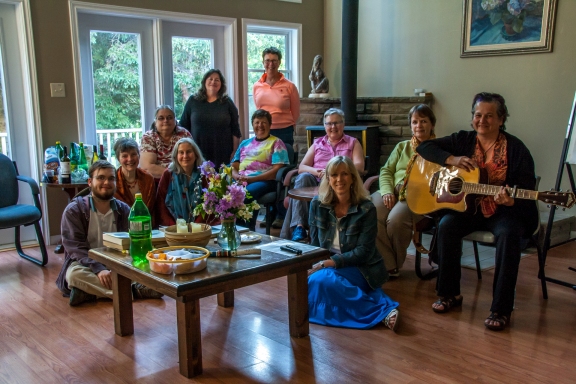
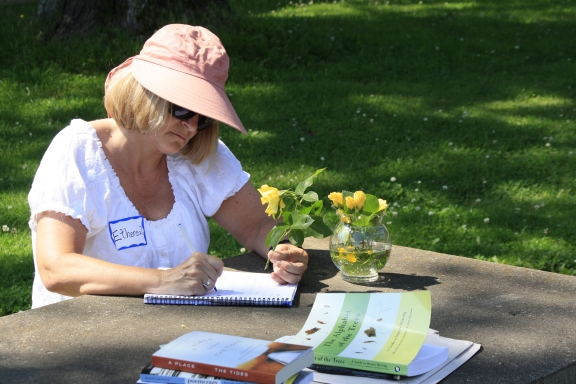
It’s time to let your writing spirit take flight and spend time appreciating our great outdoors with other like-minded birds. Sussex Celebrates Nature event organizers have advised me that they are able to offer my June 2nd Write in Nature workshop free of charge. Yay!

They have planned an entire day packed with writing workshops and nature excursions, so if you live in the vicinity of Sussex, NB, you may wish to take advantage of this fantastic opportunity. There is something for the whole family and a variety of morning writing workshops with well-known NB writers, Beth Powning, Kelly Cooper, Janie Simpson, Elaine Hogg, Elizabeth Stevens, Ben Whalen. No writing experience necessary.

Details on the workshops and nature excursions can be found on the Sussex Celebrates Nature website.

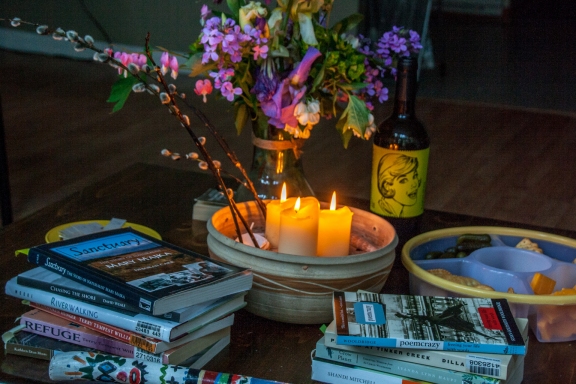
As well, Mary Majka will also be on hand and speaking at lunchtime, and copies of Sanctuary will be available should you wish to get one signed.

Categories: All Workshop & Book Events, nature, Sanctuary, writing | Tags: , , | 1 Comment

The dreams we have

“No matter hard how they work, how gifted and talented they are, or how big their dreams, the poor have few choices and fewer opportunities to fulfill their God-given potential. These precious human beings, created in God’s image, have been left behind and cast upon the garbage dump of history by circumstances they cannot change.
We must never say it is their fault. How dare we?”

~Richard Stearns, The Hole in Our Gospel

Now that I am well-planted once more in Canadian soil, drinking in clear, cool Canadian air and fresh Albert County water… I must say I am more grateful than ever to be Canadian.

Grateful for the freedom to work hard and to realize my potential from the results of my labour – not because I deserve it or earned it – but granted to me by the chance of my nationality and birth.

You see, no matter how hard a Haitian – and the other poor of the world – may work, how great their desire, they are limited by circumstances and man-made systems and disasters beyond their control. All by the chance of their birth.

So I wonder…when we hear that all we need to do to achieve our dreams is to release our negativity, think positive, believe in our potential, envision our success and set our intentions, how does that work in countries such as Haiti or Uganda or Sierra Leone?

Or do these principles only apply to select geographical locations?

But of course, a North American dream is much bigger than the average Haitian’s. We dream of a Harley or BMW while they dream of owning a single donkey. We dream of 3000 sq. ft. beach houses with granite counter-tops and ceramic floors, while they dream of a 16×10 concrete house with real doors and windows. While we dream of climbing the corporate ladder and making our first million, they set up their little produce stand and dream of making enough to put their children through the school year.

We dream only as far as we can see. As a child, I dreamed of a Barbie Country Camper or making a pass mark on my book report. As a teenager, my dreams had names and walked with a swagger…or the really crazy ones stared down at me from a poster on my bedroom wall. In my twenties, I dreamed of an office with a window and my name on the door; in my thirties, a house in the country; in my forties, a trip to Tuscany.

But now I see further than I did two months ago. I’ve seen the other side.

Although I spent my first few days at home in a fugue, I’ve gradually found my footing again. I am being cautious, though. I don’t want to demean or devalue this experience by becoming all judgmental and self-righteous and preachy about our life versus theirs.   What I witnessed in Haiti has the power to change me in a profound way…it’s important that I allow it to do that.

But in that changing place, I now see how shallow and self-serving my own dreams have been.  So I ask myself:  As someone who has access to the stuff dreams are made of, why would I not include dreams for those who don’t? Will I be so single-minded in my own pursuit that I cannot help someone else achieve theirs?  Will I be so focused on where I am going that I cannot help another find their way?

We, who are not limited, are notorious for introducing our own fears, constraints and mind-games to keep us cemented in our ruts. We sigh and wish for this or wish for that and yet do nothing concrete to make it happen. So often, we have the opportunity, but no desire; the poor may have the desire, but no opportunity.

We squander our dream potential.

So for now, I’m forming a new dream; it’s just coming in wisps and idle thoughts, fragments and solitary words, but just there, in the space where the unimagined is born, it’s starting to take shape.

Categories: change, community, courage, creativity, faith, Haiti, hope, thoughts | Tags: , , , , | 5 Comments

The hope that remains

Certainly, I have much to contemplate in the ways this trip has cut me apart and rearranged the pieces.  I’m still trying to find the right words and feelings.

Which is somewhat ironic, as that’s precisely what I was there to teach.

On a shoestring budget, our little team completed nine workshops in 16 days, reaching about 140 people in more than 15 communities and three provinces of Haiti. I am so grateful for the incredible translation skills and energy that Dr. Liz Fleming brought each day. And the thoughtful observations Rhonda contributed to each session and how she listened patiently to me as I blundered around my emotional reactions. And to Rick, whose significant driving and mechanical skills kept us safe and got us (mostly) to our destinations on time.

Each day, as I looked into the faces looking back at me, I wondered…how will they react? Will they find this useful? What will come out of this?  And each evening when we headed back to our accommodations, I gave thanks that I was allowed to see into such beautiful hearts – to laugh with them, to hear their stories, share their hopes, learn their culture. To listen to their unselfish dreams.

How I wanted to sit down with each one and question them to find out more, to record their words for myself. To understand who they are, how they live, what they have endured and where they find strength and resolve. I could only imagine the stories that remained hidden. The memories that are, perhaps, too painful to touch just yet.

But that’s not why I was there.

Although I witnessed a level of poverty that I had only read about in books – where an infected tooth or cut could become life-threatening, where rats may nibble toes at night, where the rain runs in through the cracks and holes in the walls – I came away with hope for Haiti.

Simply because the Haitians I met – people like Eric Jean-Baptist (a CHE master trainer) – are excited about the improvements they’ve been able to implement in their communities.

Although they are a small group in comparison to the entire population, they are courageously and generously volunteering their time to improve the health of the villages where they live. They are smart and wise. They care about their neighbours. They are visionaries; committed to Haiti’s future.

They are hard workers, organized and cohesive. They really don’t need foreigner work crews coming to build them schools – they want and need to work themselves. (Rhonda wrote a great blog post on this.)  They are able to organize their own kombits – work crews of 10-15 – when needed. They have plans for their community development that use their existing skills and abilities, but what they really need to leap forward, is to partner with organizations that have the money to invest in their infrastructure needs.

Eric, who travels from village to village doing training for AMDH and helps deliver health programs in his community, took us on a walking tour of Mombin Crochu, showing us the large school currently under construction. He hopes  he can continue to earn enough money so his children will be able to attend.


Ossé St. Juste and Erigeur (Eric) Jean-Baptiste

I sat down with AMDH Director, Ossé St. Juste and asked about his hopes for his country. Ossé was one of eight children. His parents farmed, sold produce, worked hard to put their children through school.

They taught him well:  “You have to respect everyone, whether children or older people. And you should not be of two words. Always do what your promise. If you say yes, I will do something, do it; if you borrow something, give it back. We should not have what is not ours. These are the things that will protect you in life so you will live in peace with others.”

This quiet, humble man was a tailor before he started with CHE in 1992, making not quite enough for he and his wife to get by on, yet still volunteering in schools. For twenty years, he has been on the front lines, working for children, encouraging adults, helping Haitians uncover their own God-given abilities and potential. He has seen foreigners with lofty ideas and solutions come and go. He’s seen people with good intentions make promises, start projects then sometimes, be unable to finish them. He has watched political leaders rise and fall. He has witnessed political and civil unrest.

Much has happened in Haiti that remains unspeakable but still, he has hope. And faith.

“You are not going to work on total change; you are going to first change the individual heart. So stage by stage, that is how things are started. In this way we will arrive at a national change. So this is the hope and vision I have for Haiti.” Ossé St. Juste

He feels the CHE program “is a beautiful philosophy that can bring a physical and spiritual transformation – first for the people who participate directly and then indirectly for those who benefit from the changes. ”

“I think that when you speak to people who take our trainings, even if they are not able to act  because their means, either economical or ability, don’t allow them to, but you feel there is action happening in their head and a change that is starting to happen. They begin to see things in a different way and have another way of reflecting and confronting the problems of the country.

“The changes start in an individual and then move to his family, then the neighbours, and then the community. This then moves to the province, then the national.”

And so with such wise words, I think…yes. This, then, is real hope for Haiti. Great change will start with changing one single heart.

Mine has certainly been changed.

But then, I wonder, whose heart will come next?

Categories: change, courage, faith, Haiti, hope, writing | 13 Comments

Final day in Haiti

(Although I am back home again now, I am still processing the lessons learned. In the meantime, I did want to share my final day in Haiti with you.)

Our final workshop took place in Limbé, in a concrete church decorated with toilet paper, colourful paper chains, paper doves, plastic flowers and palm boughs shaped into hearts. Considering all I had seen in the previous weeks, these decorations gave me such a sense of happiness. I pictured the camaraderie that created this…the laughing and teasing as they made paper chains and wrapped toilet paper around wires.

I had a sense that many of those present were dressed in their Sunday best for the occasion.

As always, those gathered started the session off with a prayer and a hymn. A tall man in a white shirt and dark glasses sang solo, his sweet voice lifting high into the rafters, then the rest joined in on the chorus. I didn’t understand the words, but didn’t need to. I was sure that all of heaven stopped to listen.

It is a CHE custom that training sessions take place in a circle, so that no one person assumes superiority over the others present. As we worked through the morning’s series of writing exercises, a group of children hung around the doorway, quietly watching and listening.

Then, as dinner time approached, the number of children grew.

Our lunches were always prepared by local ladies and arrived in Styrofoam containers. Usual fare was very filling: rice and beans, fried plantain, a piece of chicken or pork, sometimes a spoonful of cooked carrots or beets, or a garnish of tomato, onion and lettuce.

During each workshop, I noticed that most of the participants set a portion of their meal aside to take home to their families. Sometimes a few children would arrive to share their mother’s food.

Rick, Rhonda, Liz and I always ate sparingly, so our leftovers were put to good use.

On this day, we began to eat, all I could think about were the hungry children at my back, watching. I looked at the adults eating before me and it simply felt wrong. But they, also, had empty bellies and hungry family at home.  There are no easy answers here.

I managed a few more spoonfuls before speaking to Liz. “Could I give this to the children?” She asked Mme Grimard, who was the group leader. She looked around.  “There are too many children…we will wait and see what is left over.”

In the end, none of our team ate much, so she took our trays out to the children to share.

Later, a tall, angular man came to the door looking for handouts. His shirt fell from his shoulders, his pants were hitched high and gathered around his waist, showing his ankles. Mme Grimard took him outside to speak privately.

Rhonda whispered, “Mme Grimard will ask him – ‘Are you sick? Are you disabled? Can you work?  If you can work, it is not good for you to expect handouts from others.’  She is very caring, but she will not enable dependency. She will only help those who are not able to help themselves.”

“The way we act toward the economically poor often communicates – albeit unintentionally – that we are superior and they are inferior. In the process we hurt the poor and ourselves.”
(When Helping Hurts by Steve Corbett & Brian Fikkert)

As difficult and painful as it is to respectfully turn away someone who is asking for money or food, I have learned this is a core value of CHE…to promote self-worth and personal development through independence and work ethic.  The result is a strengthened community that relies first on its own assets and abilities.

In Cap Haitian, we had encountered young boys of about 14 or 15 along the waterfront. Most likely, they had probably left home to avoid being another mouth to feed and had come to the city to wash cars or change tires to earn a few gourds.  When the men in the truck rescued us in the mountains – despite us being foreigners – they did not ask for anything, saying they could easily be in the same situation and in need of help. And when I spoke to Liz about giving the women washing clothes in the creek something for allowing me freedom with my camera, she was careful to explain to them that I was a photographer who would get paid for photos, so I wanted to pay them as well.

Several times during  workshops, participants mentioned that it was them doing all the work, not me.  This was important to them and they seemed very pleased with this.

Basically, the goal of the exercises was not just writing, but to help participants to ‘see’ the value in their own stories. To first lift memories to the surface, then to encourage reflection upon the wider significance of their experiences. I also hoped they would begin recognizing and appreciating their own natural abilities and those in others. On this day, in particular, they astounded me with their character observations.

We took a group photo and wrapped up early as rain was expected and many had a long distance to travel home. Despite wearing their good clothes, they would either walk, hire a motorcycle, flag down a tap-tap or take a derelict school bus reborn as public transit.

It was common to see up to 4 people on a single motorcycle.

Our own truck had broken down that morning, so Liz, Rhonda and I had to hire motorcycles (about $1 each) take us home.  As we waited at curbside, the thunder rolled overhead. So did my stomach. I had not been on a motorcycle since my teenage years.

Shortly, our three chariots arrived and the first raindrops started as we drove away. Within seconds, the Haitian skies cracked and we were driving through sheeting rain as lightning flashed across the mountains. I spoke no Kreyole and limited French, so hoped the driver knew where he was taking me. I felt terrible that he was getting soaked along with me, but he seemed quite used to the weather.

Holes in the road filled quickly with water, and dirt turned slick with mud. The driver wove through traffic, and as we passed a large delivery truck on the right, it swerved around a hole and cut us off. We veered further right, narrowing escaping the ditch.

I hung on harder.

We followed behind a tap-tap filled with Haitians who were laughing and pointing at the rain-soaked ‘blan’ on the back of the bike. It’s probably not a sight they see often. I laughed back, starting to enjoy the experience.

I have no idea how my driver could see through the rain without a windshield or a helmet. I kept peering around his shoulder, thinking if we were to hit a pothole or skid off the road, I wanted some advance warning so I could throw myself in the proper direction (preferably away from the wheels of a bus), but the rain in my face made it impossible to watch for long.

Bless his heart, he got me home safely, albeit primed for wringing.  Liz and Rhonda fared about the same, although apparently Liz had the limited benefit of an umbrella…

A cold shower and a change of clothes later, so ended my final day in Haiti.

Categories: Haiti, memories, writing | 7 Comments

The way of things

The past is beautiful because one never realizes emotion at the time. It expands later, and thus we don’t have complete emotions about the present, only the past.
Virginia Woolfe


There was no one thing that could have prepared me for the complexity and contrasts of Haiti. It will be a long time before I can realize  full expression. That it has to seep slowly through me and it will only be in the looking back that I may be permitted to perceive the significance. Like hiking to the top of a mountain, then turning to see the path you have taken.

For now, there is a calm acceptance to everything I’ve witnessed. But, I feel the end drawing near. I haven’t written about feelings or emotion much since arriving here…I cannot. To do so would open a crack I am not yet prepared to open.

I’m thinking it is like learning to water-ski. You can’t over-think. All you can do is try to remain balanced as you skim over the surface of the water. You cannot think how deep it is, or what lies beneath or what comes next. You just take each new wave or corner and hope to remain upright. And pray your legs don’t give out.

Author Wade Davis has written, “In Haiti, the present is the axis of all life.” I copied this quote down for some reason that seemed significant at the time.

I think I now understand why, although I am sure I am just brushing the surface of it.

So, I take each thing as itself…just for now. It is the way of things here.

There is a worn old man in a battered straw hat on the side of the road. I cannot conceive of the moments of his life that led him here – the burdens his brittle bones have borne –  so my gaze goes on to the child dancing naked in the dust. I cannot imagine his future, so I glance from his small tilted house, billowed out at the corners, to the half-but-never-finished, mildew-stained cement house next door…someone’s broken dream.

From there, my gaze falls on a truck lurching past, horn blaring, brimming over with people, all of them packed in like cattle, but laughing…then the motorcycle carrying four people, then the slumped shoulders oh the tired woman herding three donkey’s laden with sugar cane, charcoal and bags of rice, and from there…the hopeful lottery booths with their familiar colours, the uniformed school girls walking arm in arm, the woman wearing the purple hat and pushing her wheelbarrow of goods down the street and finally, the rooster darting across the highway.

Then Rick swerves around a hole in the road, bangs into another and our heads bob and sway like dashboard ornaments.

And then we are on to the next thing.

This is the way it goes. This is the way it stays.

Categories: change, contradiction, Haiti, Matters of the Heart, thoughts, writing | Leave a comment

Holding on

I know I’m the classic cliché of the countless foreigners who have walked this way ahead of me, but my stomach is objecting and a lethargic weariness is taking over that has nothing to do with sleep or rest. I feel that I am getting close to the point when all the images I have collected in my head will have to spill out.  But I’m holding on.

In this country awash in misery and hope, I have questioned why it is that the plight of animals bothers me so.

Why do the plaintive cries of the tiny cat we’ve been feeding, whose four kittens disappeared after only 2 days (dogs or rats?), rip at my heart?

My first tears fell after unwinding a terrified puppy from a wire fence. He was tied with a short strip of rag to a big wooden frame to keep him from escaping its yard. When he tried to climb through the fence, he got himself hopelessly tangled and was choking. Rhonda, bless her, in her wonderful wise way, knew what would help..she took me on a hike to the top of the mountain. When I felt mired, she fed my spirit. She showed me the beauty.

But later, I had to ask myself, why was it this that broke me, in the midst of all that is Haiti?

These boys were hoping to sell a puppy to a 'blan' (foreigner).

The best I can come up with at this early date, is that the human tragedy is simply too complex and enormous for me to dwell upon. If I allow it space, I fear it might overwhelm me. But the feelings of compassion, of helplessness, are still there, so I direct them at something manageable. Something familiar.

Or maybe it’s like a release valve. Enabling me to continue looking the Haitian people in the eye…enabling me to see the ways in which they try to survive each day, and admire their strength and dignity and resilience. When I see that they can still dream, I am able to skim past the destitute and the dreary surroundings, watching for the smile lifted from a frown when eyes meet eyes.

In the midst of all this, I see You.

Isn’t it the strength of human spirit that compels us to seek the beauty? Isn’t this the pure evidence of our humanity? To strain our eyes, to peer into the gloom in order to find a glimmer of light? Any light?

I watch, day after day, as the young and old write carefully in their notebooks, then spill out words that are so simple and beautiful that they simply make my heart leap.

People have said, ‘This is such a gift”, but I think it is more accurate to call it an unveiling.  As they have pointed out, “It is us doing the work. You are making us reflect.”  Through their work, they have experienced the empowerment that sharing our thoughts and stories can bring.

I have not given them something they never had before. I’m just saying, “Listen, listen to your thoughts. Look into your mind, peer into your heart. See what is there in a different light. See?  It is all in you, just waiting. Now, what might you do with this?”

They uncovered a part of themselves they always sensed was there, but did not know how to reach. We’ve crossed paths and that crossing creates change. I still don’t know what to do with all the dark eyes, staring into mine; the voices saying, “Will you come back? We want more of this training.”

For now I’m just holding on.

Categories: change, courage, creativity, Haiti, hope, thoughts | 5 Comments

Rural Haitian Life

We traveled through many villages during our stay in the mountains. AMDH’s Director Ossé St Juste comes from Mombin Crochu, so perhaps he wanted to start the workshops here, so I could experience remote Haiti before the more populated areas.

My head is awash in images, but fortunately, my camera has captured a few so I can show you a bit of what I have seen. This is almost a surreal place, a clash of culture, as if a 20th century people, complete with cell phones, fashions and motorcycles, were transported into the 18th century.

As with all villages, land means everything. A family with even a small plot of land can garden and graze their animals. They have two planting seasons a year and grow sugarcane, beans, peanuts, corn, vegetables; perhaps banana or plantain or a mango tree.

Most have a few chickens; to own a goat or a pig is a blessing, to own a cow is a future. Often a family will keep a cow for emergencies…a commodity to sell if someone gets sick and needs medical aid.

Cockfights are common as a social gathering and possible money-generator…this man is washing his rooster with herbs for a fight later on.  Truthfully, the treatment of animals here is one of the hardest things to bear.

We passed a dead pig on the road, and beside me, Rhonda moaned. “Oh, to lose that pig must have been a tragedy for some family. We cannot imagine what such a loss would mean.”   Chickens, pigs and goats roam freely everywhere – country and city – and are very road-wise.

Rhonda once asked a woman, “How do you know whose chicken belongs to who?”   The woman looked at her incredulously. “If you owned something, wouldn’t you know what it looked like?”

Sometimes families will own land that is many miles from home and so they build a small lean-to or woven garden house – a joupa – to accommodate them during the planting and harvesting seasons. Often, they are gardening by hand on steep 30-45 degree slopes of the mountains…breaking up the soil and hoeing it all by hand.

I have not seen a single plough or any other mechanical farm implement. I don’t know if they even use horses to help break the soil.

Those who own only the land their home rests upon must find another way to survive. They sell in the marketplaces and at crossroads, make furniture, repair tires and motors, work with mortar, sew, cook hire themselves out to others.

The hills of Mombin Crochu are naked and dry. The mountains are stripped of most of their trees. The timber was cut and burned to create charcoal or build homes. The number of people who have begun to adopt good agricultural practices is spreading, but hunger still trumps knowledge. Some have begun to practice terracing, crop rotation or soil regeneration, but until others actually begin seeing the results of this, many will continue in their old ways.

Several men in our workshops spoke of how they needed outside financial help to begin reforesting so they could protect and nourish their environment. Others dream of studying agriculture. They cling to dreams, but have no where to place them, no means to see them grow. There is earnest desire here, but there is no money.

Through the writing workshops, some have begun to see that if they can share the stories of their community successes, they may stand a better chance of finding financial support for the projects they wish to implement.

Lagatt is one of the communities that has become cohesive in their approach to enhancing the well-being of their people and environment.

Tippy taps, like this below, are simple hands-free handwashing stations implemented to stop the spread of cholera. The water-filled jug is tied to a branch on the ground. Tapping the branch tips the jug to pour out the water. A soapdish hangs nearby. It is now a strict routine to wash hands before eating.

Tippy Taps

Simply designed hand-free handwashing stations in the villages to prevent spread of cholera.

To combat malnutrition in the village, the people of Lagatt formed a co-operative community garden.  They purchased a plot of land, and sectioned it off for the families that do not have gardens. They developed and enforce their own set of rules – one of them the requirement to tether animals to keep them from grazing in the gardens. If an animal that has not been properly secured damages a garden, the owner will lose his own garden plot for a year.

Through this garden, and along with education on proper dietary requirements for health, they have expanded the variety of food eaten and improved the health of the community, greatly reducing the cases of malnutrition.

Inside a cookhouse

Parasitic worms are an ongoing problem in children and animals throughout Haiti. Rhonda points out naked children with distended bellies, a sure sign. There were quite a few children with ringworm in the region, many showing advanced stages with bare or grey patches on their scalps. With help from medical agencies, the CHE communities can be quickly mobilized to assist with health initiatives, such as immunization or distribution of medicines. They just need that outside support.

Children attend school only if their parents can afford the tuition, books and uniforms. Each school has a distinctive uniform.  It is quite beautiful to see all the children in their neatly pressed outfits.

Haitian school children in uniform

School children in uniform

There is no electricity. A few buildings have generators to supply light in the evening for few hours. Because their homes are dark, social life takes place outdoors. Women spend time chatting or selling at the markets, children do each other’s hair or play under the mango trees, men sit knee to knee playing a game of cards on a board balanced on their laps.

When the moon is full, they gather in its light to tell stories.

In a workshop, one man wrote, “Then I turn my eyes to the heaven to see the full moon shining, and I feel I could walk all night, to all corners of the country. It makes me remember the purposes of God.”

The average home is about the size of a North American bedroom, with several wooden slat doors, perhaps a few windows. Most have a separate cookhouse, although some families share one – a small hovel with a rocked in fire-pit, tables for preparation.

The women dry and grind their own spices. The most common meals are beans and rice, seasoned pork or chicken, a sauce of carrots and tomatoes, or spaghetti with vegetables. Our favourite supper was la-bouyi – a soupy velvety-smooth, pudding-like concoction of ground oats or plantain, mixed with sugar, flour and canned milk and then boiled.

The largest buildings are churches or schools. Occasionally, colourful flags rising above the trees will indicate the residence of a vodoun priest.

No one has running water, although there are several water pumps in these villages. From the time a child is old enough to walk, they are taught to carry small amounts of water. As they get older, they carry heavier and heavier loads upon their heads.

This young fellow had a very handy contraption. The front wheel is a motorcycle sprocket.

The women walk with grace and strength, carrying heavy buckets of water on their heads for miles and often up and down very steep inclines – whether by road or pathway. Buckets such as this are filled to within an inch of the top, yet they spill not a precious drop.

Water pumps (or fountains) are Haiti’s version of the water cooler: places to gather for stories and social times. Mombin Cochu used to have six fountains for the whole village – one by one, they broke down and without outside money to repair the lines, there is only one fountain remaining for the entire village.

While we saw a few men carrying bundles of wood or sugar cane, or hauling heavy loads on pull-carts, it was mostly the women who carry water, baskets of laundry or products to sell at the market on their heads.

And the contrasts. On one stretch of road, we might see a man coaxing a cow to pasture; another carrying a bundle of branches on his head; a family dressed in their Sunday best; little girls with ruffled socks or a boy trying to run in a man’s shoes; a young man sauntering along with an electric guitar and singing; a group of men walking with a battery and a set of gigantic speakers; a child atop a loaded-down donkey; a stooped old man hobbling, his toes poking out from his shoes, a frayed cowboy hat on his head; a bare-breasted woman beside the road, in a small hollow, bathing in a few inches of water; a young man talking on a cell-phone.

If they are lucky enough to have a water source handy, then laundry is done at the river. When our truck broke down on the way to Mombin Crochu, we were stranded beside a shallow stream where a group of women were washing their clothes.

They graciously allowed me to photograph them at their work. Begin able to observe these women without their posing was one of the highlights of my trip. I think they were delighted with the diversion our mechanical dilemma offered to their chore.

How shall I toss my dirty clothes into the washing machine, without thinking of these women and the weekly process of scrubbing and beating and rinsing their clothes to remove every last stain? I have never seen white gleam as it does in Haiti.

They will spread the clothes on the riverbank to dry or take them home to air dry in the trees and cactus.The way they care for their clothing shames me when I think consider my cavalier approach – the ease of which I can toss things in the washing machine.

I leave you with the image of this severely malnourished boy who we spotted playing alone. He seemed to be shunned by the others. Sometimes developmental problems or mental illness may be a reason to be ostracized because such things are not understood, or sometimes those who are simply lethargic or anemic are considered zombies and avoided.

Whatever the reason for his exclusion from the groups of children, this young man was incredibly talented with his simple wooden spinning top, which he spun with a frayed rope and could easily scoop up off the ground with one swipe of his hand, the top continuing to spin on his palm.

I cannot forget his unsmiling face, the hollow look of his eyes, the way his flowered jeans cinched about his tiny frame.

What does the future hold for him? What promises does even tomorrow bring?

Categories: community, courage, Haiti, hope, landscape, writing | Tags: , | 7 Comments

In the Haitian mountains

Our next three days in the villages surrounding Mombin Crochu gave us all so much to think about…

In Logat, Elio opened his home to host one of our workshops. Made of hardened mud, painted white, with bright blue doors and hung with sheer blue curtains, the home was obviously well cared for.

Sardined tightly inside, 18 of us teetered on small wooden chairs with woven seats. The floor was hard-packed dirt.  As the voice of the group rose with an opening hymn, I watched a chameleon walk across a rafter above me. He stopped mid-stride and his throat bubble out, like he was breathing deep, preparing to sing along.

Children peeked around corners, giggling and watching what we were doing. Once they saw my camera, everyone wanted their photo taken. They were delighted to see themselves in the small viewing window. Most have never seen a photo of themselves.

They do not know how beautiful they are.

I hope to find a sponsor when I get home – someone or a business that will finance the printing of these photos and ship them back to AMDH for distribution in the communities. (Anyone with any contacts? Ideas??)

Rather than have us use the outhouse, Elio offered his bedroom and chamber pot to us female ‘blans’. His bed was neatly made, the pillowcase pressed, clothes hung around the walls. It felt like an invasion of his privacy, but he seemed proud to offer, even insisting on emptying the pot for us. When Liz objected, he said, “You are guest in my home, this is what I do for you.”

During the workshop, when I asked if there were any questions, one man looked me directly in the eye and said, “Are you coming back?  Can you come back and give us more training?”

What could I answer? My heart crunched. “I don’t know.”

(This became a common request…made at every single workshop to come.)

At the end of the afternoon, one man prayed, “Thank you, God for this beautiful workshop. May we continue to write our stories so that our children’s children will know who we were and what we did on this earth.”

This has turned out beyond our wildest expectations. Every group has a different dynamic, and certainly not everyone takes to the writing, but in each group are a few that work so hard to put their words on paper; and most seem elated and empowered by the opportunity to speak their stories and words out loud.

And they see how writing can give them something proud to hang on to. How their own words can be a gift to those who come after them.

I think this is extraordinary. Day after day, I struggle with it, feeling totally ineffectual and just hoping that what comes out of my mouth is useful. And day after day, I hear simple words that amaze me.

In Mombin Crochu, a tiny woman of about my age dressed in a smart black dress and hat, stood and spoke with harsh vibrancy about the mistreatment of women…about their hard lives and what they sacrifice for their families. “God did not mean women to endure this misery,” she said. Her voice was strong, her presence imposing. She was a natural orator. She spoke her words like poetry. When she wrote of her mother’s death, she had to stop, the tears began flowing.

I saw in her a woman who could move mountains, who could be an advocate for women, who could possibly gather the stories of women. (She’s the lady on the left, below.)

As the day went on, when I asked them to write about dreams, this is what they wrote:

“I dream of giving my mother a concrete house, so she can be happy.”

“I dream of having a bank account.”

I have a business idea. I want to buy a donkey so I can start my own business.”

A serious young man who never smiled wrote that his dream was to become doctor, so he could help heal people in his community.

A tall lanky farmer – an older man – spoke of his dream to send his children to school, but he didn’t know how he could ever make the extra money it required in his lifetime.

Another work-weary farmer who quietly and painstaking wrote his few words with the utmost care spoke of a similar dream and how to do so would put a ‘song in his heart.’  By the end of the workshop, he had fallen asleep. I wondered what time he had awoken that morning; how far he’d walked to be here with us…what he would think about as he made his long walk home.

When he left, I reached out to shake his hand, “Mwen konten wey ou.

I am so happy to meet you.

Categories: change, community, creativity, Haiti, Matters of the Heart, relationships, writing | 3 Comments